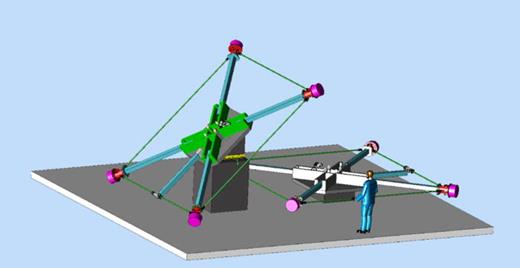

Is it possible to very precisely observe Earth motion and general relativity effects being inside a cave? The GINGER experiment exploits the Sagnac effect of two light beams counter-propagating in a closed loop to do it.
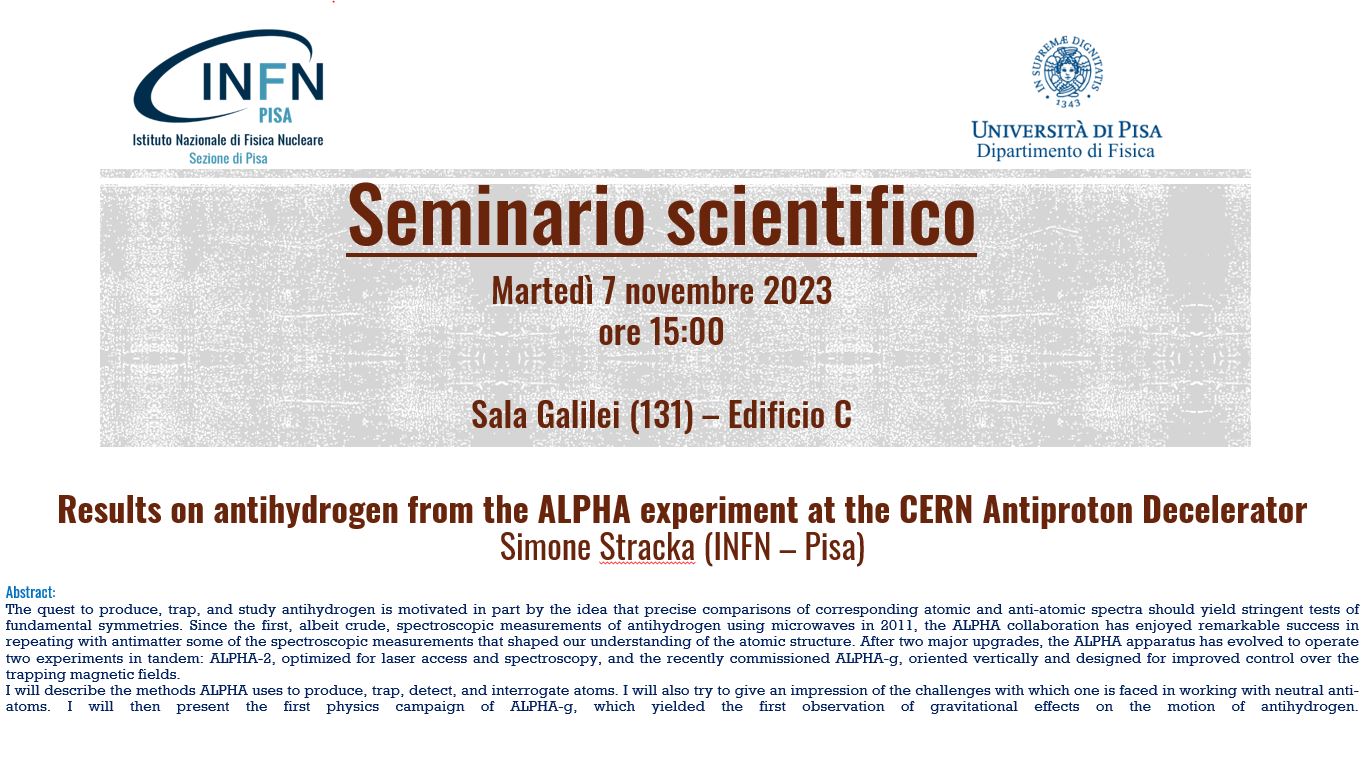
Simone Stracka (INFN – Pisa)
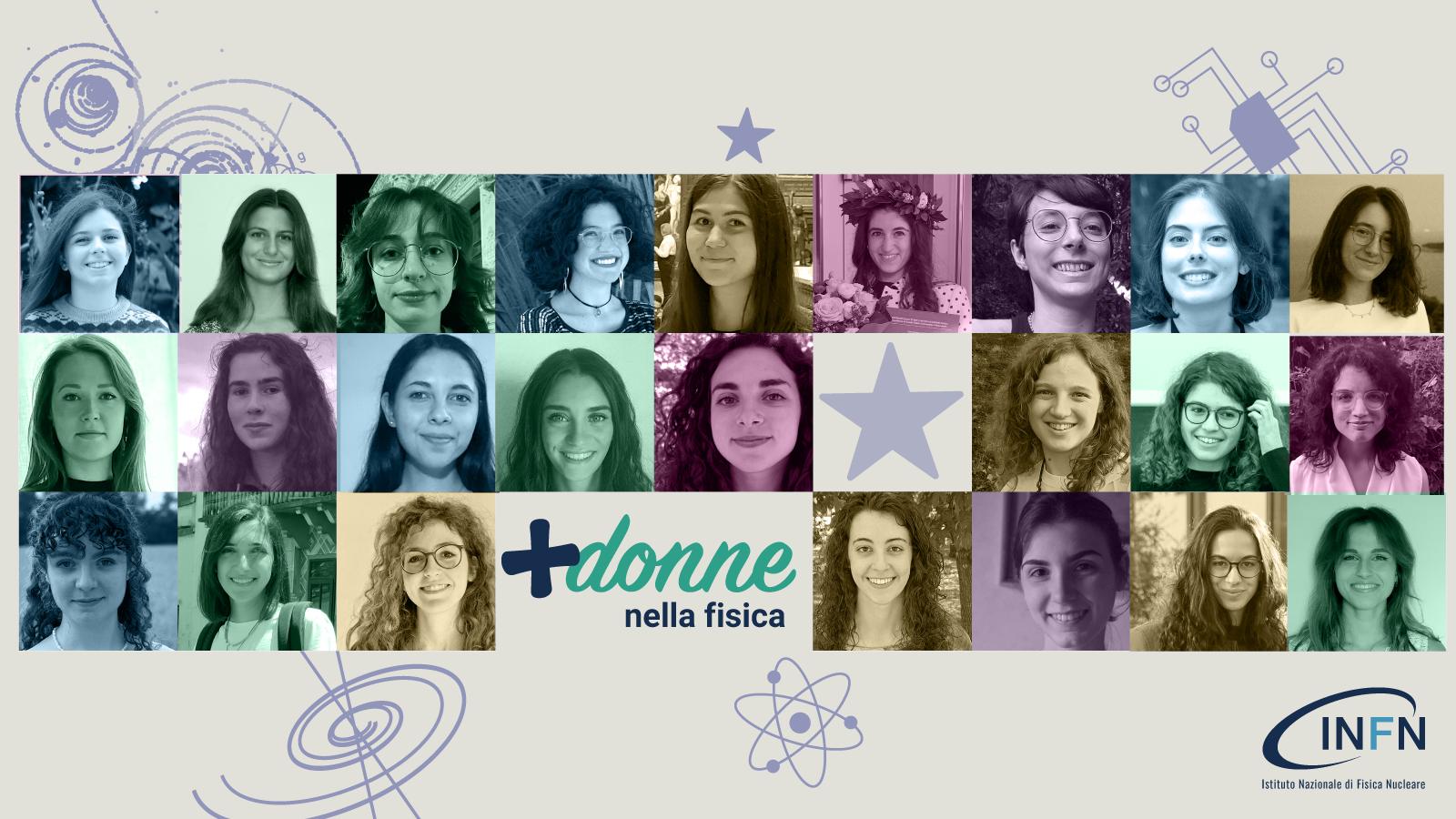
Venticinque giovani studentesse in fisica, vincitrici del concorso INFN “Più donne nella fisica”, sono state premiate oggi, 28 settembre, alla presenza della Giunta Esecutiva e del Consiglio Direttivo dell’INFN, nel corso di una cerimonia che si è tenuta presso l’Università degli Studi di Roma Tre, in occasione anche delle celebrazioni per i 25 anni della Sezione di Roma Tre dell’INFN.
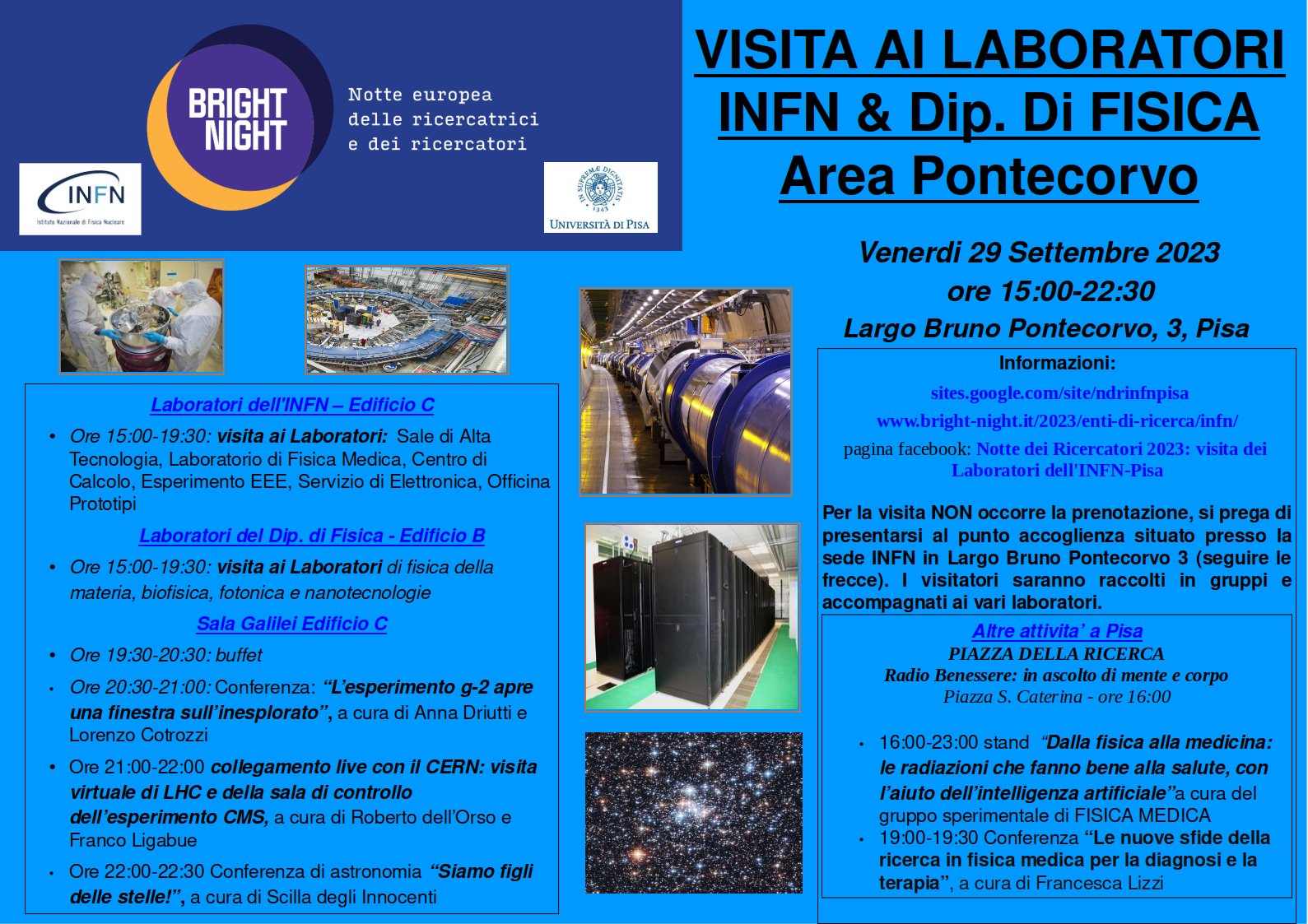
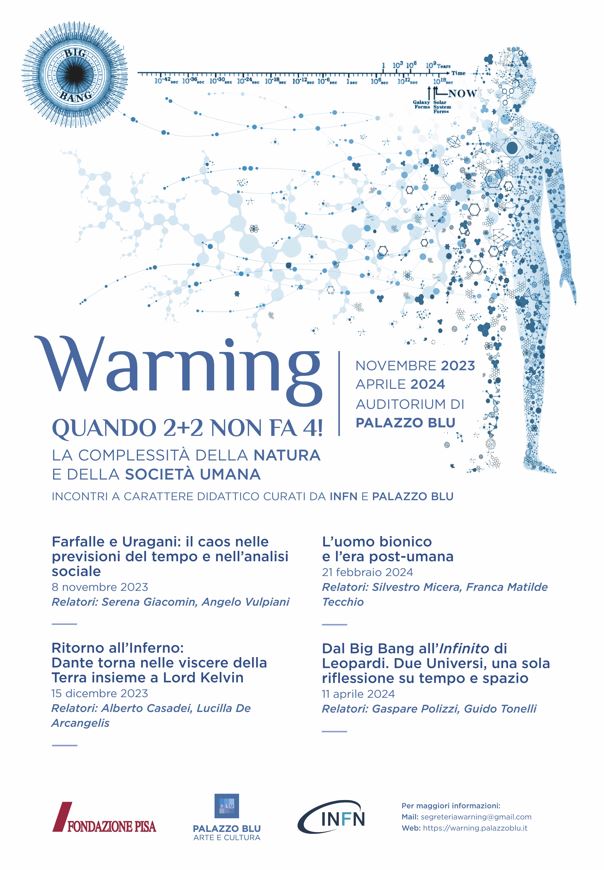
Ciclo di seminari divulgativi presso Palazzo Blu
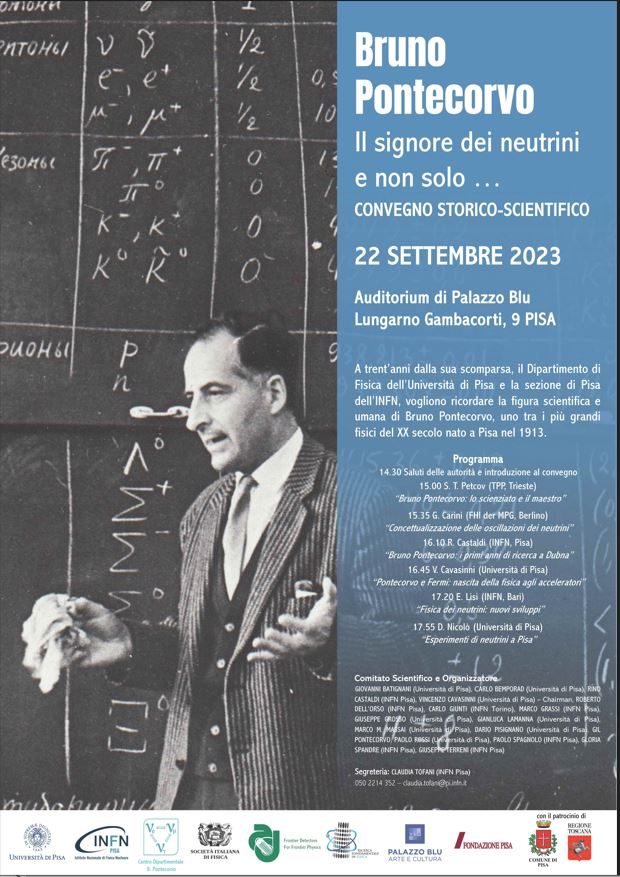
Auditorium Palazzo Blu – 22 settembre 2023
Laura Zani (foto), laureata in Fisica nel 2016 all’Università di Pisa dove ha anche conseguito il dottorato di ricerca nel 2020, è la vincitrice del premio Giuseppe Franco Bassani della Società Italiana di Fisica (SIF) per i giovani ricercatori.
Il riconoscimento le verrà consegnato l’11 settembre in occasione del 109° congresso nazionale della SIF che si svolge a Fisciano presso il Dipartimento di Fisica dell’Università di Salerno.
Laura Zani si è formata presso il Dipartimento di Fisica E. Fermi dell’Università di Pisa e la sezione dell’Istituto Nazionale di Fisica Nucleare (INFN) di Pisa, lavorando ad esperimenti su acceleratori asimmetrici di elettroni e positroni, le cosiddette B-factories. Il suo primo incontro con la fisica delle B-factories risale al 2015, durante i due mesi trascorsi presso lo Stanford Linear Accelerator Center (Slac), a Menlo Park (California), lavorando all’analisi dei dati dell’esperimento BaBar nell’ambito di un programma di scambio fra SLAC e INFN.
Dopo BaBar, Laura Zani si è quindi concentrata sull’esperimento Belle II relativo al collisore elettrone-positrone SuperKEKB a Tsukuba in Giappone. In questo ambito si è occupata della ricerca di un possibile nuovo bosone oscuro Z’ che decade in stati finali invisibili in eventi con una coppia di muoni ed energia mancante. I risultati del suo lavoro hanno prodotto il primo articolo di fisica di Belle II.
Dopo il 2020 ha vinto un postdoc presso il Centre de Physique des Particules de Marseille (CPPM), nell’ambito del progetto ERC Nepal di Justine Serrano, proseguendo la sua ricerca in Belle II sulla violazione di sapore leptonico nei decadimenti del tau. Dal 2022 è ricercatrice a tempo indeterminato presso la sezione INFN di Roma Tre.
Abstract:
The creation of antiparticles in the Galaxy has been discussed as a potential signal of exotic production mechanisms such as primordial black hole evaporation or dark matter decay/annihilation, in addition to the more conventional production from cosmic-ray (CR) interactions. Recent CR detectors have provided very accurate measurements on the spectra of antiprotons and positrons that we use to search for evidence of new physics. In addition, the exciting first measurements of the flux of anti-nuclei can be achievable in a few years.
In this talk, I discuss the uncertainties related to the modelling of these antiparticles and show state-of-art predictions of their spectra. We will also talk about recent dark matter constraints from antiprotons and positrons and discuss the expected fluxes of anti-deuteron and anti-helium from global analyses of different CR observables in view of the first tentative detection of anti-nuclei events by the AMS-02 collaboration. Finally, if time allows it, I will discuss an ongoing study where we use CR data to place constrains on the annihilation of electrophilic FIPs (such as ALPs, sterile neutrinos, dark photons, …) created in Galactic supernovae.
Collegamento ZOOM
https://infn-it.zoom.us/j/84261721878?pwd=MDZNaGdBUlcvUUJXa2phSHZVZk5sdz09
Abstract:
Understanding gravitational wave (GW) detector noise at the time of a candidate event is critical for GW analyses at all latencies, from rapidly generated candidate alerts to GW source catalogs and population studies. GW skymaps, tests of general relativity, and resolution of subtle, low-SNR effects encoded in GW signatures (e.g. spin precession and eccentricity) are especially vulnerable to transient noise present in the data of one or more detectors at the same time as a GW signal. I will give an overview of the challenges in evaluating data quality at the time of a GW candidate as well as past and current “event validation” approaches for LIGO and Virgo data. I will highlight a subset of machine learning methods deployed for the latest LIGO-Virgo-KAGRA observing run (O4) to help automate this process for LIGO-Virgo researchers to field a higher expected rate of GW detections. I will discuss how these improvements will benefit a wide variety of downstream GW analyses.
Coordinate ZOOM:
https://infn-it.zoom.us/j/84261721878?pwd=MDZNaGdBUlcvUUJXa2phSHZVZk5sdz09
ID riunione: 842 6172 1878
Passcode: 611379